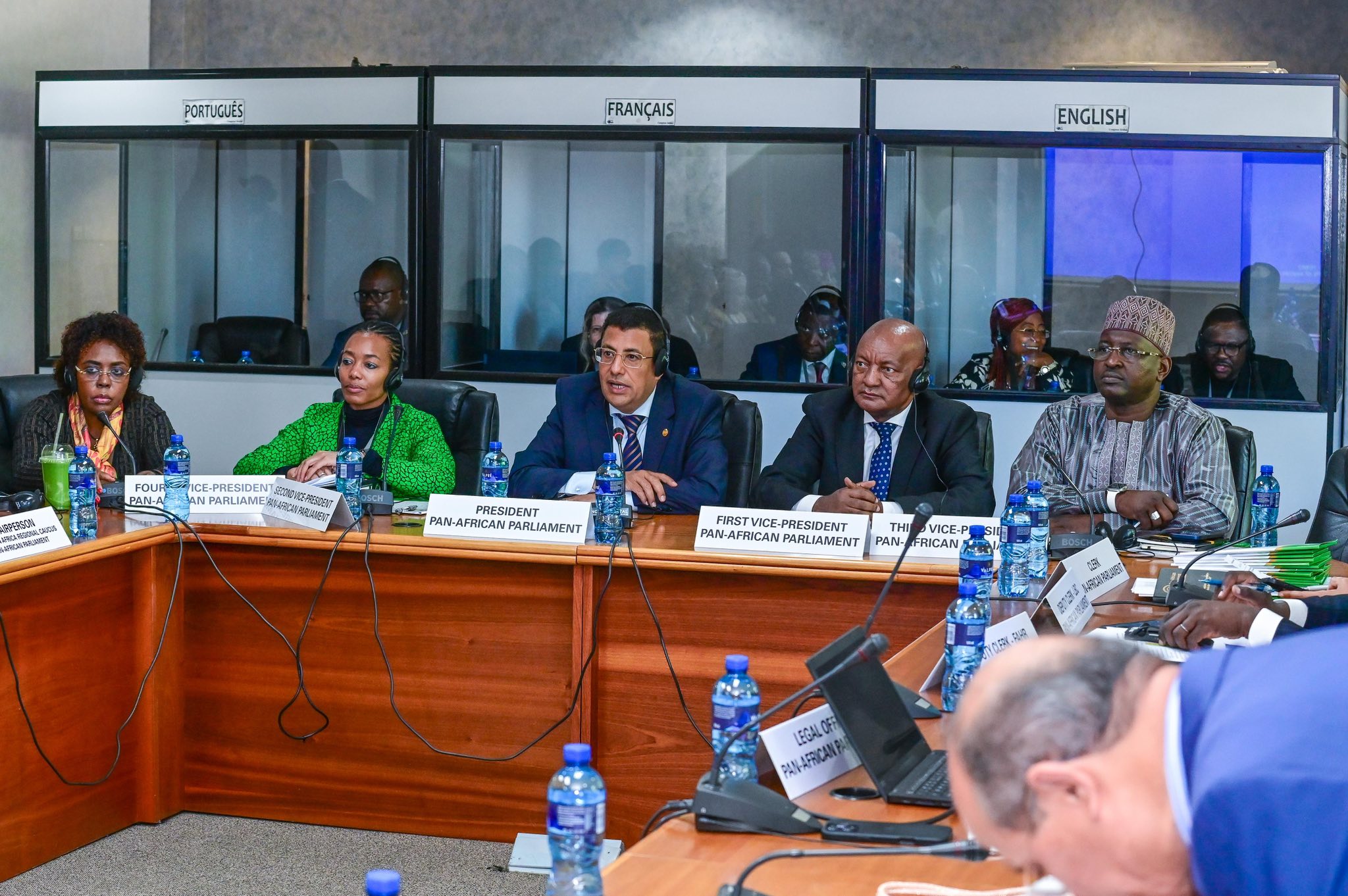
Prince Estifanos Matewos, President of the United Africa Royal Assembly, has extended his warmest congratulations to the newly elected Bureau of the Pan-African Parliament upon their assumption of office. He characterised the Bureau’s election as a solemn continental trust, evincing confidence in their judgement, integrity, and collective resolve,to advance unity through the Parliament’s custodianship of democratic legitimacy and the continental vision.
Addressing the prevailing continental context, Prince Matewos observed that Africa’s complex peace and security challenges demand principled and coordinated responses, requiring steady leadership grounded in dialogue, mutual respect, and an unwavering commitment to stability. Thus, the necessity of the Parliament remaining a forum of reason and consensus, upholding the enduring principle of African solutions to African problems.
He further highlighted that the Bureau’s stewardship would be measured in part by its contribution to advancing Agenda 2063, the continent’s blueprint for inclusive growth, good governance, and sustainable development. He stated that the realisation of its aspirations requires leadership that is both visionary and firmly rooted in the realities and heritage of African societies. Placing particular emphasis on governance, Prince Matewos reaffirmed the enduring significance of traditional leadership within Africa’s institutional landscape. He noted that, across centuries, traditional leaders served as custodians of culture, arbiters of community life, and anchors of social cohesion, with authority derived from history, continuity, and the trust of their communities.
He recalled that the imperative to harmonise indigenous systems with contemporary governance has long been recognised by visionary African leaders such as Kwame Nkrumah and Julius Nyerere. This vision found renewed expression in the continental outlook of Muammar Gaddafi the principal architect of the modern African Union, who elevated traditional authorities and sought to integrate them, both symbolically and practically, within the broader architecture of continental governance.
Prince Matewos further noted that continental instruments such as the African Charter on Democracy Elections and Governance, together with deliberations within the Economic Social and Cultural Council of the African Union (ECOSOCC), continue to affirm the importance of inclusive governance. These frameworks, he stated, present a clear opportunity to more fully recognise traditional institutions as partners in peacebuilding, conflict resolution, and sustainable development.
Reaffirming the commitment of the United Africa Royal Assembly, Prince Matewos affirmed that the institution stands ready to collaborate closely with the Bureau and Bureaux of the Pan-African Parliament in advancing these objectives. He emphasised the need for enduring mechanisms that effectively bridge customary authority with legislative processes, thereby supporting the realisation of a United States of Africa founded upon a single government, a unified defence architecture, and a common currency. Within this vision, traditional leaders embody cultural continuity, African unity beyond colonial borders, and a shared identity across the continent’s diverse nations.
In conclusion, Prince Estifanos Matewos extended his firm expectation that the Bureau of the Pan-African Parliament will exercise bold and uncompromising leadership in the service of Pan-Africanism. He expressed confidence that their tenure will not merely steward the institution, but decisively advance the cause of a sovereign, integrated, and self-determined Africa, anchored in unity, authority, and an unyielding commitment to continental destiny.